The Myth of the Perfectly Clear Desk
A clear desk does not guarantee concentration. Learn how to keep useful materials close, contain distractions and adjust your workspace as the task changes.
A clear desk can make a task harder if it sends you hunting for materials you just put away. A useful desk arrangement keeps the tools and references for the current work accessible, while giving unrelated objects a defined place to wait.
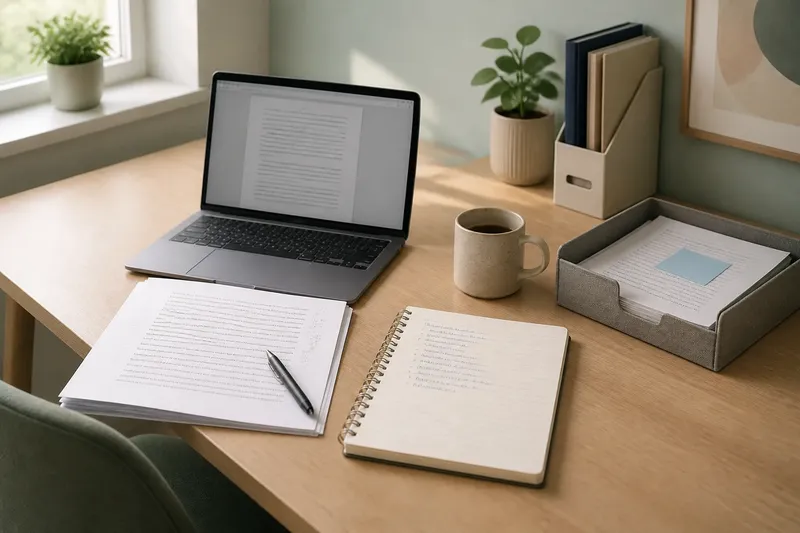
Imagine you have set aside time to revise a short report. Your desk holds a laptop, a printed draft, a notebook, a pen, a mug and papers from another job. You clear everything except the laptop. Then you need to compare the report with the draft, note a change and check one of the other papers. The empty surface has not removed distraction so much as added a small retrieval expedition.
The question is not whether the desk looks finished. It is whether useful materials are easy to reach and unrelated ones are less likely to interrupt. A bare surface can help, but it is only one possible arrangement.
A clear desk can conceal useful materials
Visible clutter can draw the eye. A stack of receipts beside an open report may bring the receipts to mind, whether or not they matter now. But putting every object away can also create needless searching. A printed draft may be essential for comparison; a notebook may be the quickest place to capture a change.
Visual quiet and practical readiness are different things. Visual quiet means the desk presents few distractions. Practical readiness means the materials needed for the work are available. These aims can overlap, but an empty desk is not automatically more useful than one with a draft, a pen and a reference page in view.
A work surface is a bit like a kitchen counter: leave every utensil out and it becomes crowded, but put away the chopping board between ingredients and cooking becomes needlessly fussy. Keep what the current work calls for close; move the rest somewhere contained.
Arrange the desk around the materials in use
For the report, leave the laptop open to the document and place the printed draft beside it at the relevant page. Keep the pen and notebook within reach if you plan to record changes. Put unrelated papers in a tray or folder rather than mixing them with the report materials.
The mug can stay if it does not crowd the papers; otherwise, move it. Neither choice needs to become a rule for all future desk arrangements. The useful question is whether an object helps with the current work or takes up space that the work needs.
When the arrangement is ready, you can compare the draft with the screen and note a change without searching for anything. The report still requires thought; the desk has simply removed a few avoidable interruptions.
Keep active and waiting materials distinct
Active materials support the task you are doing now. Waiting materials belong to another task or may be needed later. A shallow tray, vertical file or labelled folder can keep waiting papers available without spreading them across the active work area.
The working set should change with the work. A form and calculator may suit one task; a sketchbook and selected reference image may suit another. Keeping only a laptop on the desk by default is no more sensible than leaving every possible tool out.
When one task ends, return its materials to a folder or waiting area and bring out what the next task needs. If the next task is a phone call, for instance, a contact note and somewhere to write down a response may be more useful than the printed report. The arrangement can change without the desk requiring a full reset.
What should a useful desk arrangement answer?
Should everything that might be useful stay on the desk?
No. Keep close the materials you expect to use for the current stretch of work, and put less likely references in a nearby folder or tray. That keeps the active area usable without sending potentially useful items into hiding.
What if several tasks share the same workspace?
Contain each task’s materials in a folder, tray or document window, then bring forward the set for the task in hand. Unfinished work remains available without becoming the backdrop to everything else.
Does a tidy desk still matter?
It matters if tidiness helps you locate materials, use the surface comfortably or leave it ready for someone else. It is less useful if maintaining a spotless appearance becomes another task that delays the work.
What should happen to objects that keep drawing attention?
Decide whether the object belongs to the current task. If it does, place it where it is useful; if it does not, move it to a waiting area or storage rather than repeatedly shifting it around the active space.
Let the desk show whether the setup is working
Look for practical signs: can you start without searching, see the materials you need without unrelated papers taking over, and put the task away without dismantling an elaborate arrangement? If so, the desk is serving the work, whether or not it looks spare.
If your attention still wanders, the desk may not be the main obstacle. The task itself might be unclear, or the room may contain another distraction. Changing the arrangement can remove one source of friction; it cannot make every task absorbing.
For a useful desk arrangement, keep the materials for the current work accessible and give waiting materials a boundary. If you repeatedly leave the desk to retrieve the same item, bring that item into the active set; if unrelated papers keep catching your eye, contain them elsewhere. The arrangement earns its place by making work easier to resume, not by looking empty.